Somewhere between the honeymoon glow and settling back into ordinary life, a small but genuinely important task tends to slip down the priority list: thanking the people who made your wedding day happen. Wedding thank you cards are one of those details that feel minor in the planning stages but matter enormously to the people receiving them. Getting the timing and wording right does not need to be complicated, but it does deserve a bit of thought. This guide walks through everything you need to know, from when to send your cards to what to actually write inside them.
Why thank you cards still matter
In a world where most communication happens through a screen, a handwritten thank you note carries a weight that a text message simply cannot match. Your guests spent time, money and effort celebrating your day with you, whether that meant travelling to attend, choosing a thoughtful gift or simply showing up with genuine warmth. A proper thank you card acknowledges that effort in a way that feels personal and lasting, and it is one of the small gestures that guests remember long after the wedding itself has faded into memory.
When to send your thank you cards
Timing is the question couples worry about most, and the good news is that the guidance is fairly consistent and forgiving. For gifts received before the wedding, aim to send a thank you within two to three weeks, ideally sooner if you can manage it. For everything received on the day itself or afterwards, the widely accepted etiquette window is up to three months from the wedding date. This gives you enough breathing room to recover from the big day and the honeymoon before tackling a stack of cards, while still getting your thanks out while the celebration is fresh in everyone’s mind.
A practical approach many couples find manageable is writing a set number of cards each week rather than attempting to finish them all in one sitting. Breaking the task into smaller, regular chunks makes it feel far less overwhelming than staring down an entire guest list in one go.
What if you are running late
Life after a wedding is busy, and it is genuinely common for couples to fall behind schedule. If you find yourself sending cards later than planned, the best approach is simply to acknowledge it warmly rather than ignore it entirely. A short line noting that you have been savouring the memories of the day and wanted to take a moment to properly say thank you works well, and it turns a potential apology into something that still feels genuine and heartfelt. A late thank you note is always better received than no note at all.
Who should receive a card
Every guest who attended, gave a gift, or contributed meaningfully to your day deserves a card. This includes guests who could not attend but sent a gift or a thoughtful message anyway, members of your wedding party, close family who helped with planning, and any vendors who went above and beyond. It is worth remembering that guests technically have up to a year after the wedding to send a gift, so do not be surprised if a few arrive well after your main round of thank you writing is done. Keeping a simple running list or spreadsheet of gifts, names and addresses as they come in makes this far easier to track than trying to remember everything from memory months later.
Choosing the right moment to order your cards
Many couples choose to wait until their professional wedding photographs come back before finalising their thank you card design, typically four to six weeks after the wedding. This timing allows you to feature a genuine photo from your own day on the card itself, which adds a personal touch that a generic template cannot replicate. Ordering your cards early and having them ready to go, even if you have not written the messages inside yet, is a sensible way to stay ahead of the process without feeling rushed once you do sit down to write.
What to actually write inside
Good thank you card wording strikes a balance between warmth and specificity. A generic “thank you for coming” feels noticeably less meaningful than a note that references the actual gift, a specific moment from the day, or something the guest personally contributed. Mentioning how you intend to use a gift, or recalling a particular conversation or toast, shows the recipient that the note was written with them specifically in mind rather than copied from a template. For gifts of money or contributions toward a honeymoon fund, it is generally considered good etiquette to acknowledge the gesture without stating the exact amount received.
Keeping your design cohesive
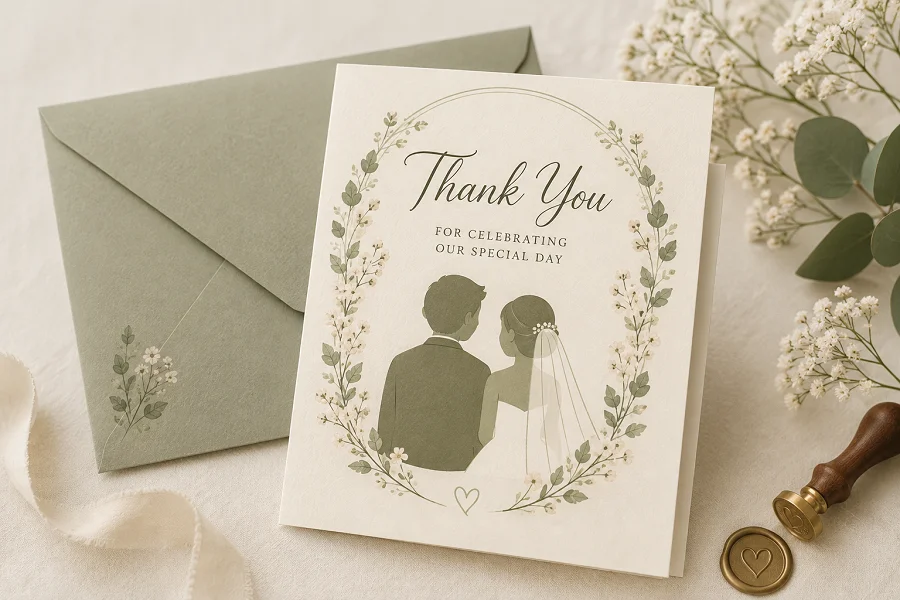
Your thank you cards do not need to match your wedding invitations exactly, but many couples find it satisfying to carry a shared design element through, a monogram, a floral motif or a colour that ties back to the overall wedding aesthetic. This creates a sense of continuity across the whole experience, from the first invitation a guest received to the final thank you note that closes out the celebration.
Handwritten versus printed messages
While it is possible to have thank you card messages printed in advance, a handwritten note carries a personal touch that most guests genuinely notice and appreciate, even if your handwriting is not perfect. If the volume of cards feels genuinely unmanageable, a hybrid approach, a printed base message with a brief handwritten line added personally, offers a reasonable middle ground between authenticity and practicality.
Building this into your overall wedding budget
Stationery costs, including thank you cards, postage and any custom printing, are easy to overlook when planning overall wedding spending, yet they add up across a full guest list. Factoring this into your wedding budgets planning from the start, rather than treating it as an afterthought once the main event is over, avoids an unwelcome surprise expense in the weeks following your wedding when you would rather be enjoying married life than managing another bill.
Making the task feel less daunting
Splitting the work between both partners, setting aside a specific evening each week, or turning it into a relaxed activity with tea and good music playing in the background all help make what can feel like a chore into something more enjoyable. Some couples find it genuinely nice to revisit their wedding photos or video while writing cards, since it naturally brings back the specific memories and moments worth mentioning in each note.
Conclusion
Wedding thank you cards are a small gesture that carries real weight, and getting the timing and wording right does not require perfection, just genuine thoughtfulness. Aim to send your cards within a few months of the wedding, personalise each message where you can, and do not let a late start stop you from sending them at all. A sincere, specific note of thanks is exactly the kind of detail your guests will remember long after the flowers have faded and the cake has been eaten.